Last year, I had to lecture on offshoring at the Worshipful Company of Information Technologists. But typically, Muppet BD arrived a few minutes early, so I took the opportunity to wander around this part of London as I have not been spending much time there. (you can click on the photo to get a bigger image). Here's the location.
View Larger Map
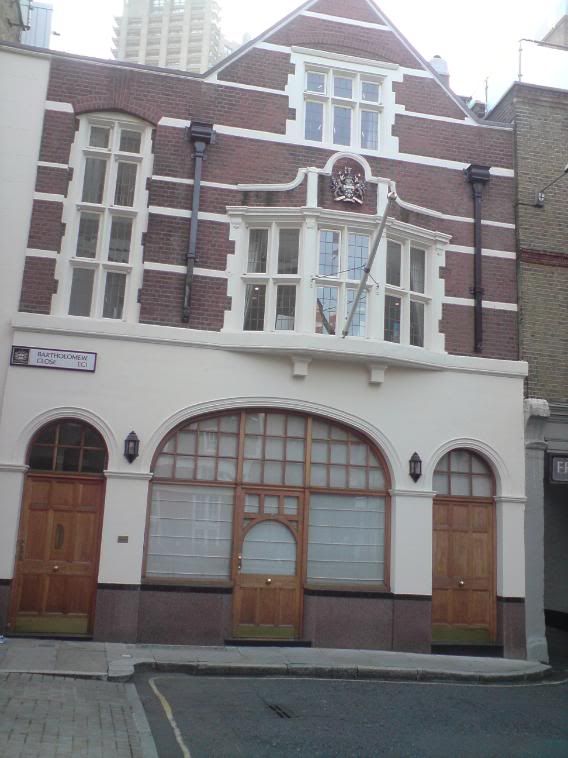
This is the Worshipful company's hall. And a lovely little hall it is too.
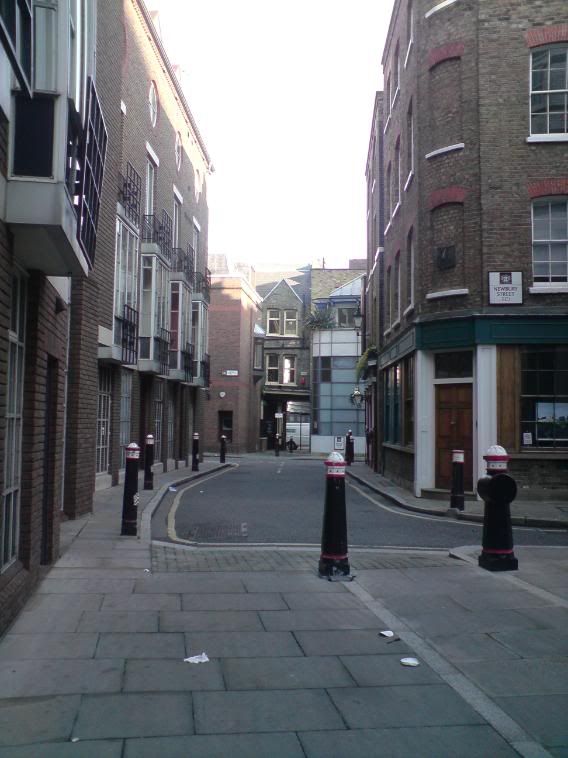
If you are blessed with a bit of an active imagination, you can just imagine how this place used to be, just outside the old London wall, dim, narrow and dingy streets and the old curiosity shop at the far end.
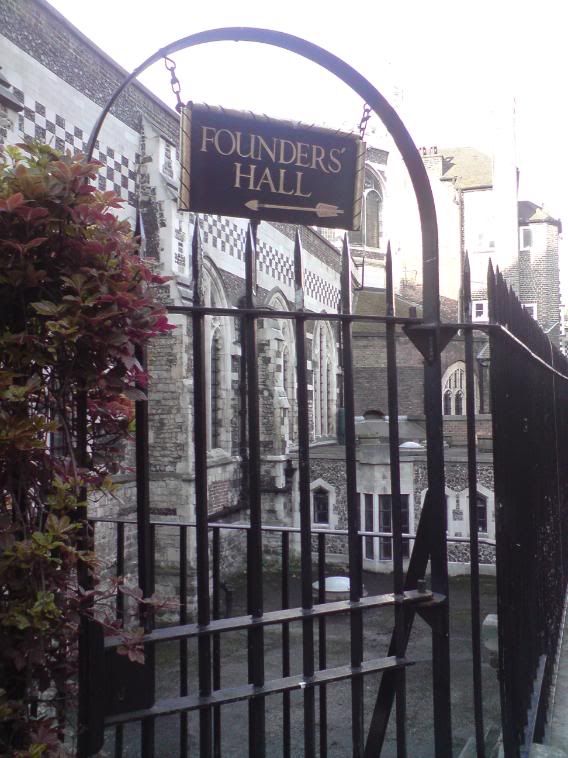
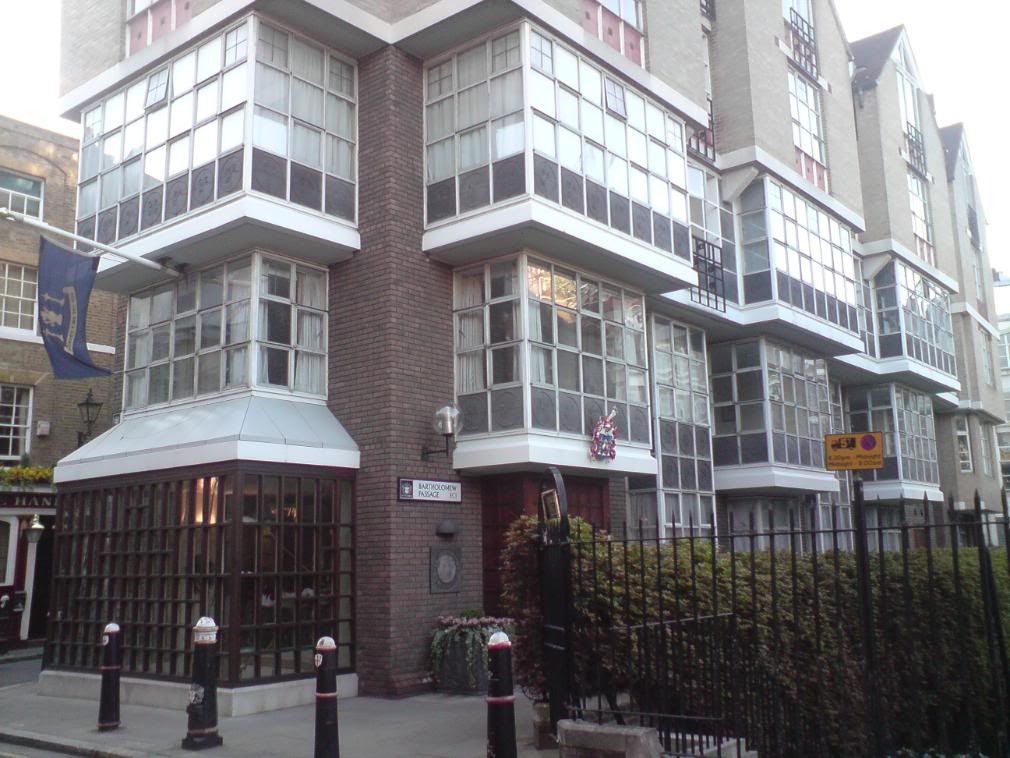
This area is surrounded with other company halls. You can see the sign which leads to the Founders Hall, belonging to the Worshipful Company of Founders. (hint: foundries? geddit?) There's the Founder's Hall on the right hand side picture. See the hall with the flag?
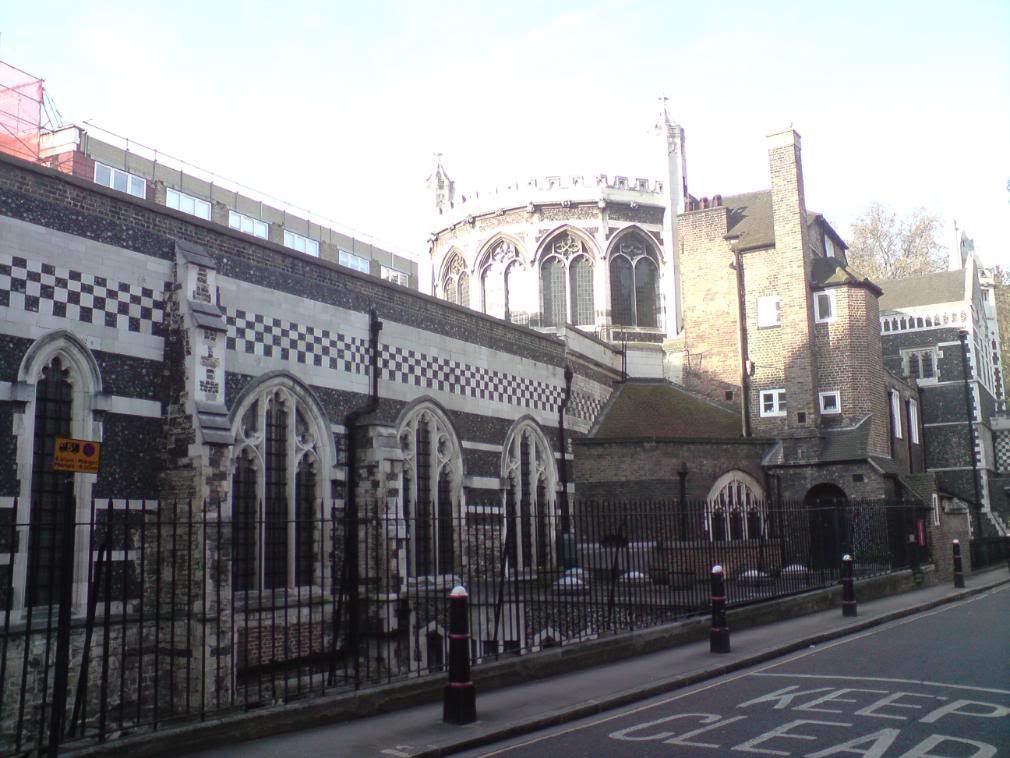
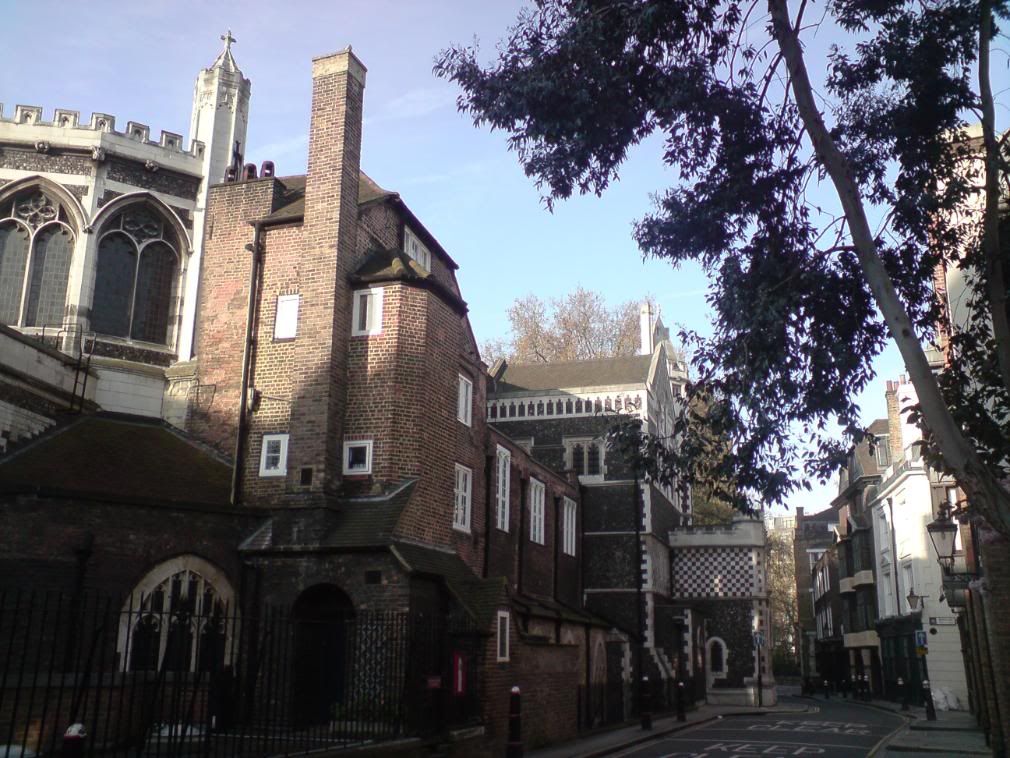
Another couple of views of the St. Barts Church.
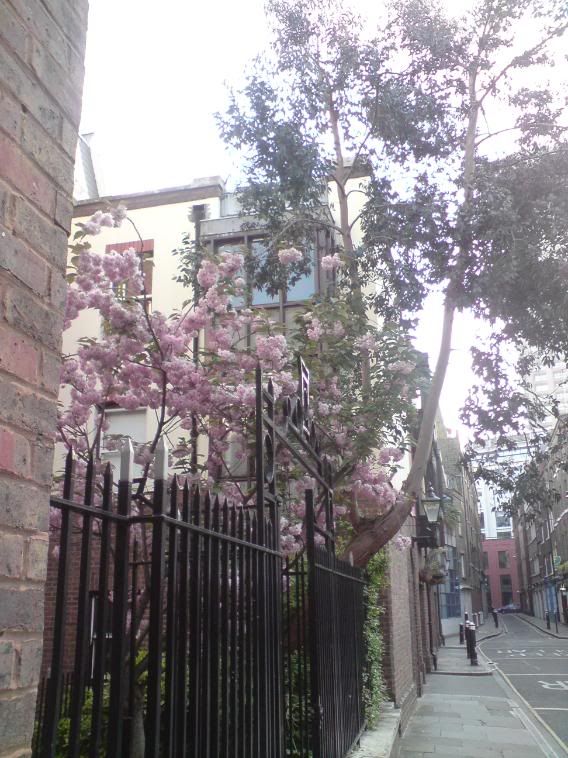
Lovely pink flowers on the way.
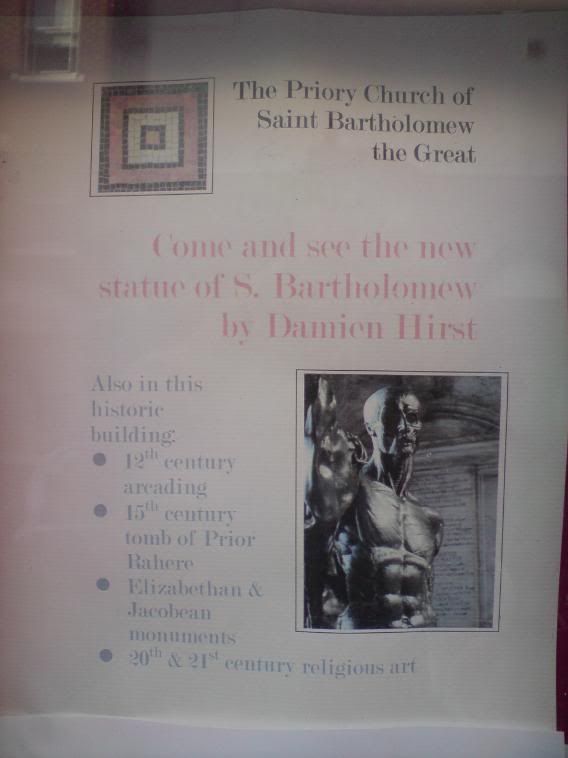
A sign on the side of the church, talking about Damien Hirst.
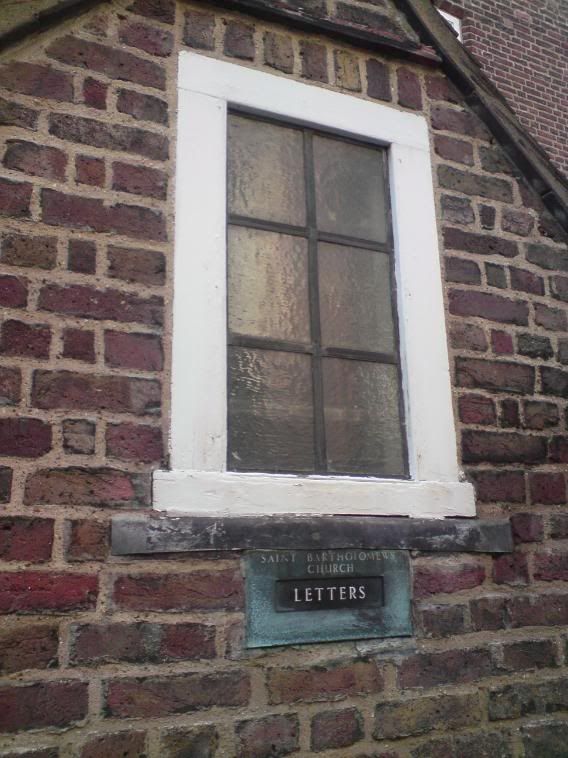
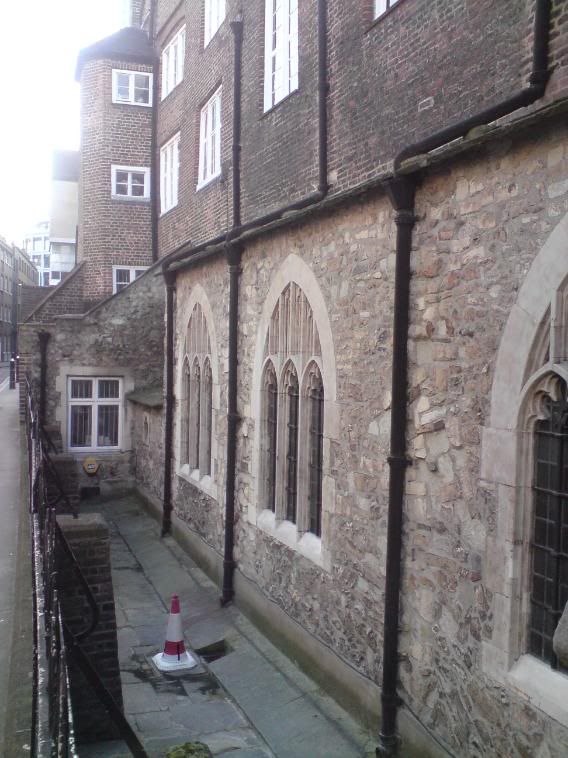
The letter box for the church on the left. It's a very old church, established in 1123 AD. Here's the history of this lovely old building. It is venerable, look at the flagstones, sunken and broken, now has a warning traffic cone sitting on top!
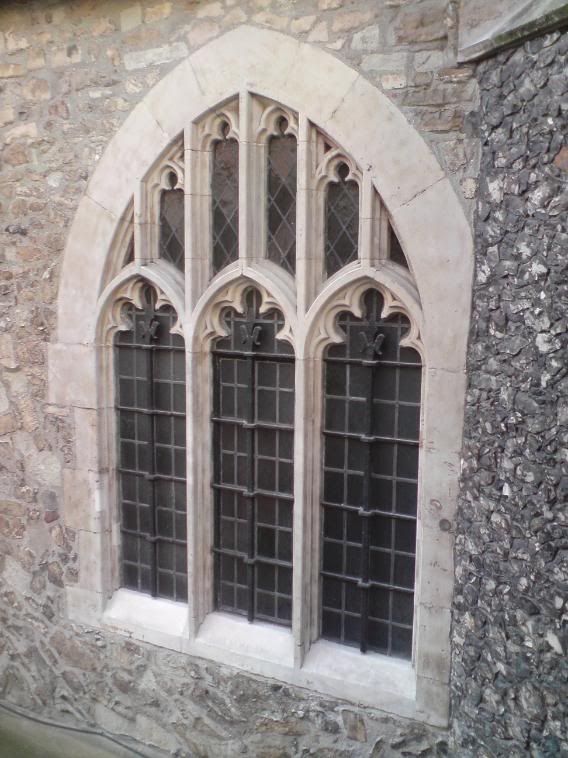
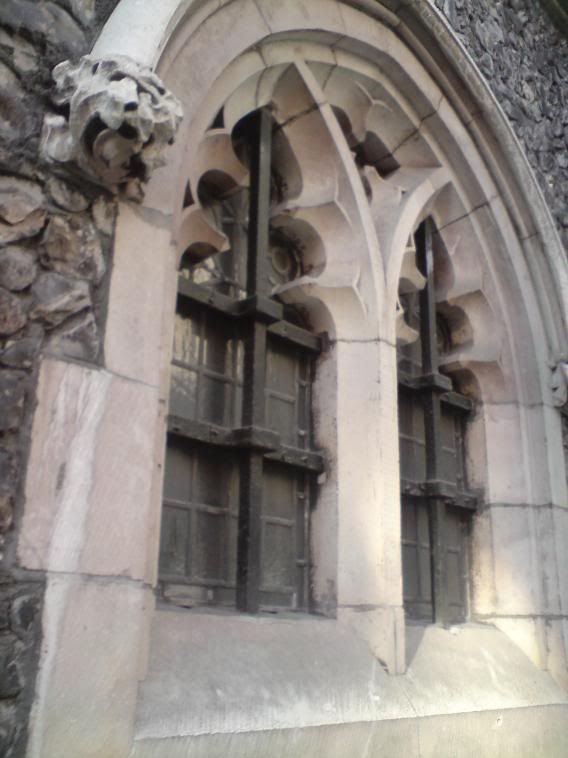
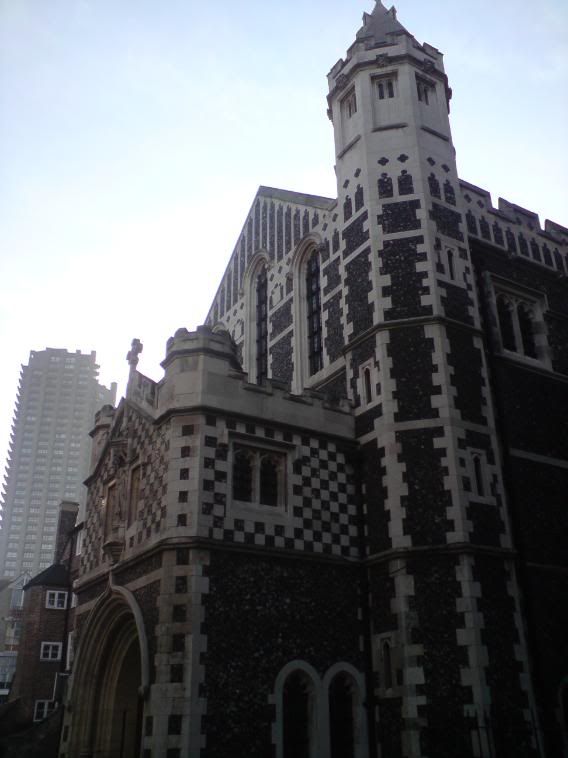
The stone work is impressive and quite detailed. On the right is another view of the stone windows. Notice the iron bars? Bloody hell, that would have taken some casting. And you bet it will be safe, but looking at the size of the bars, I wonder if they are not only for security, but also for scaffolding or structural support? Looks like it, no? Interesting ironmongery.
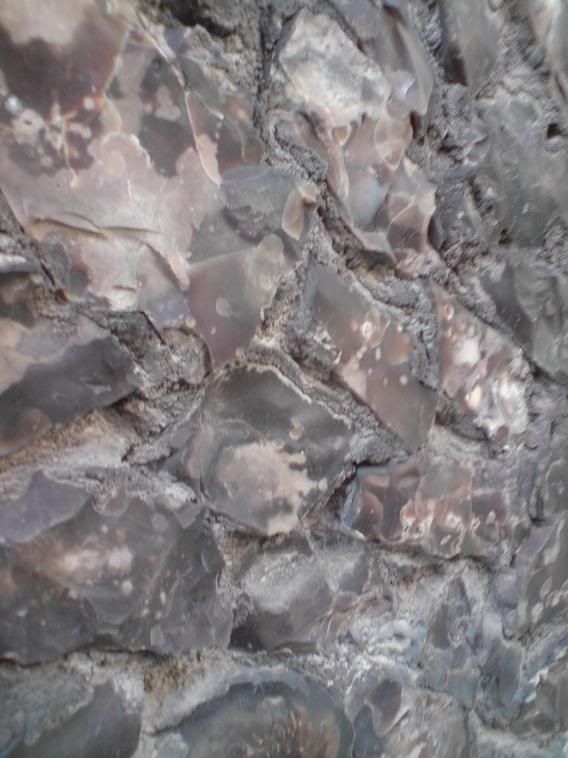
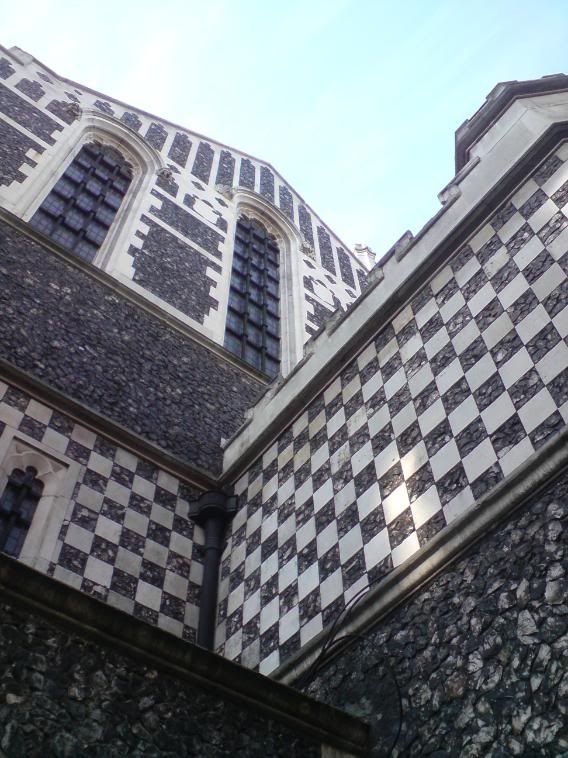
The walls were coated by these flint like rocks which are mortared in. From a distance, they do not look impressive, but on a close up one can see they have a strange unique beauty. On the right, we see a checkerboard design on the walls, between those flint like stones and actual stones (Albion stones?)
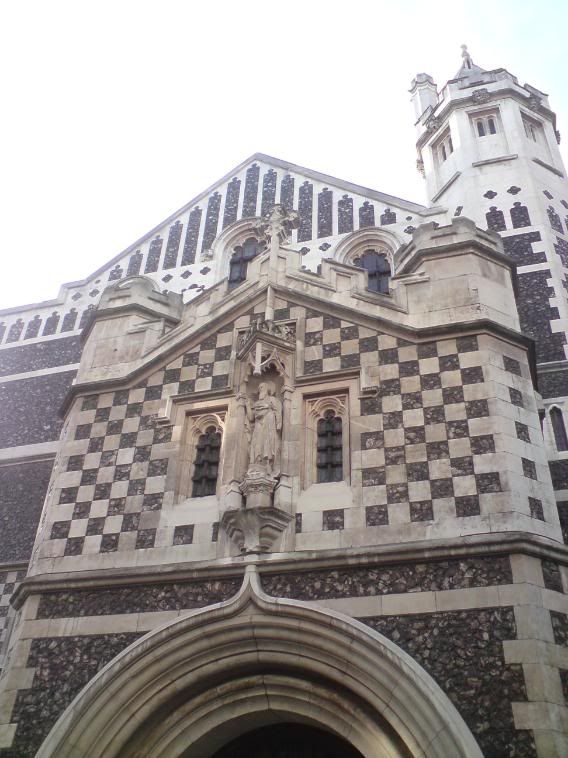
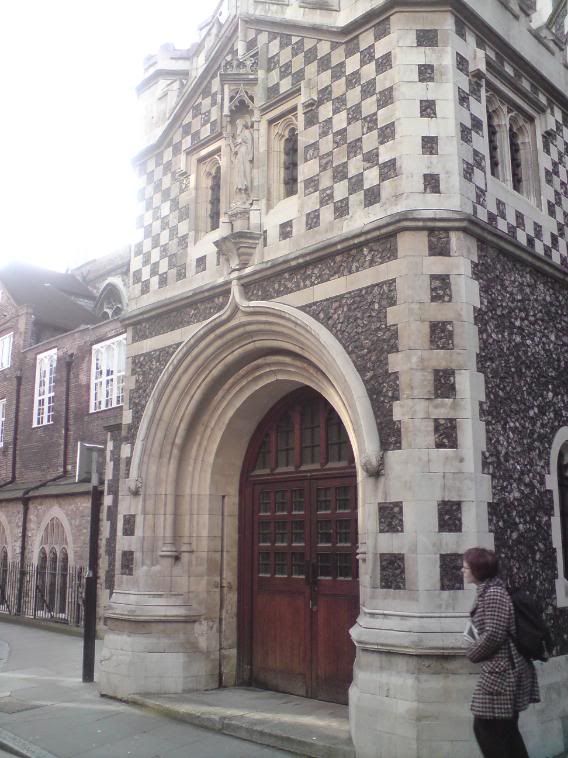
The transept side of the church. Lovely statue up there but too high up for me to make out who it is. You again see the two windows with the interesting ironmongery. On the right are the solid oak doors. There is a specific word for these doors which escapes me at this moment. (Is it called transept door?, or facade door? can anybody please confirm?)
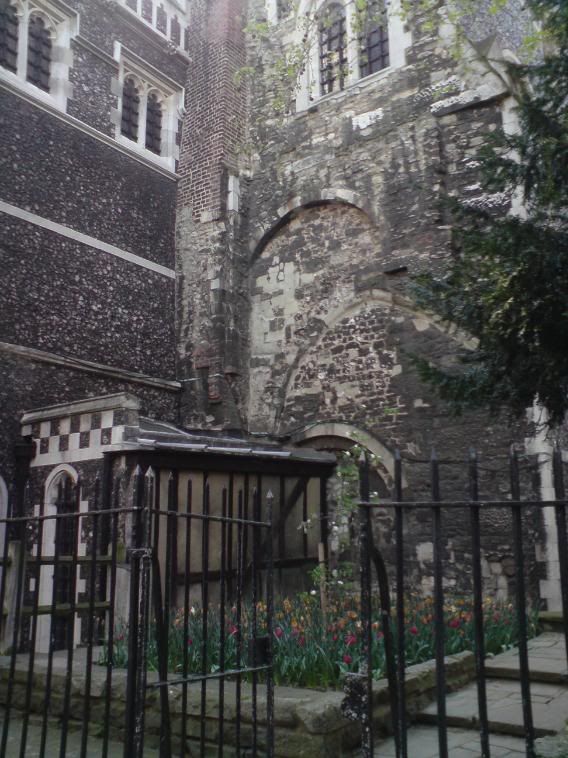
Here is the north eastern side of the church and as we move to the right, the fence shows the entrance from the side to the churchyard. You can see how venerable and ancient the walls are. No wonder this church has been used in so many films.
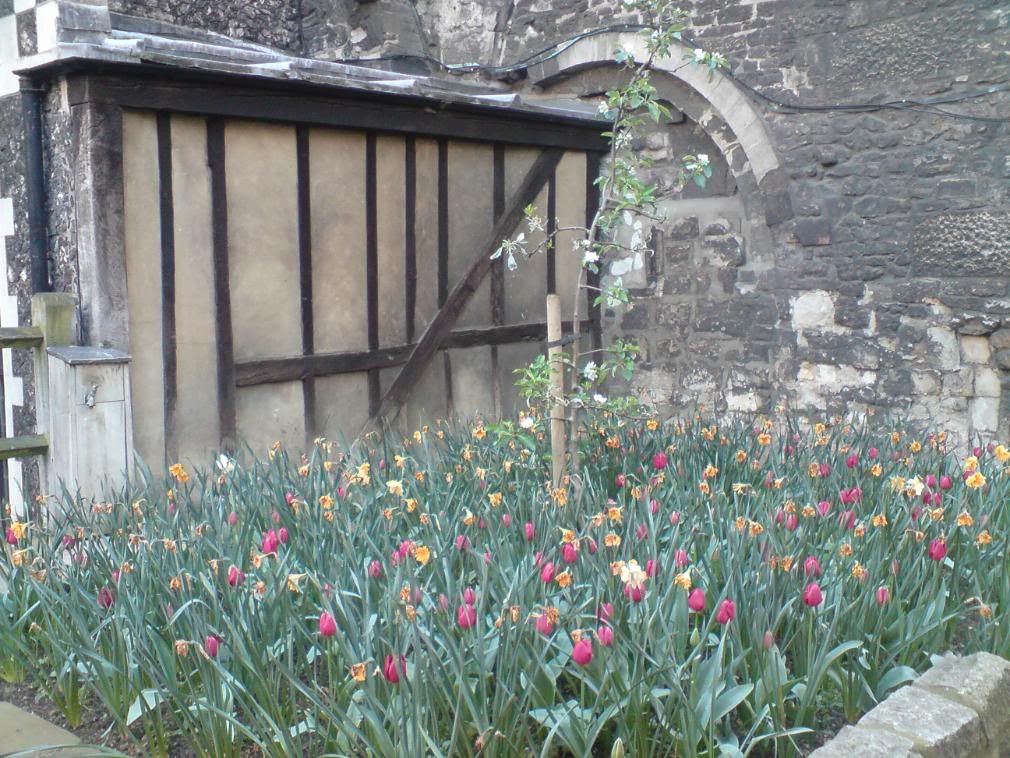
A lovely bed of flowers adding a nice and colourful touch to the weather-beaten walls.
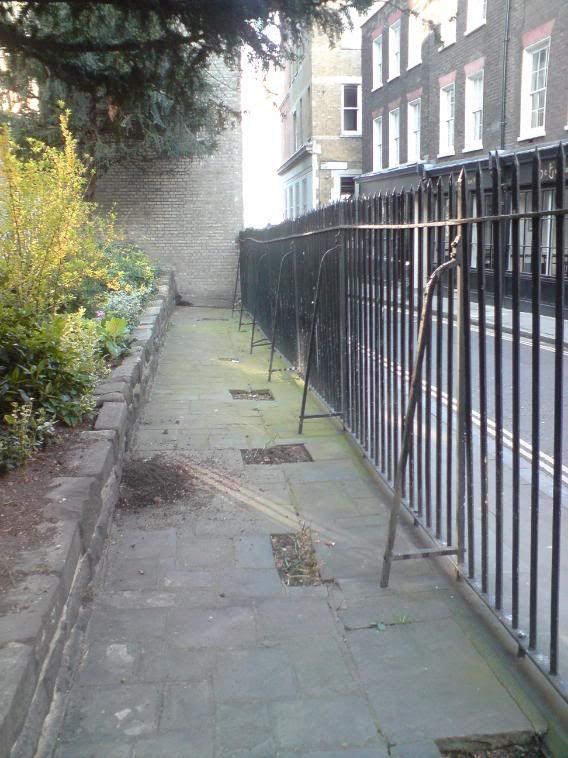
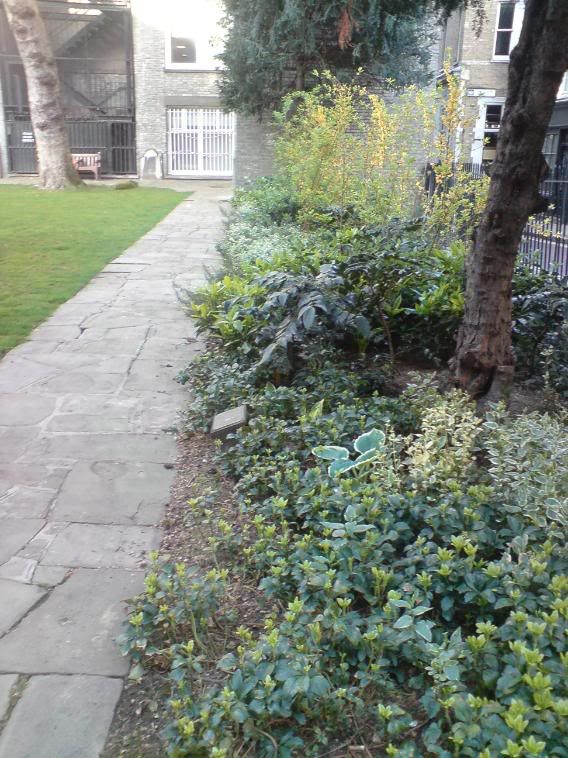
The fence. I like the buttressing ironwork. Pretty heavy duty stuff. Moving a couple of feet inside, you can see that it is actually not such a big yard, just a few little bits and bobs. Notice the plaque at the bottom of the tree next to the path?
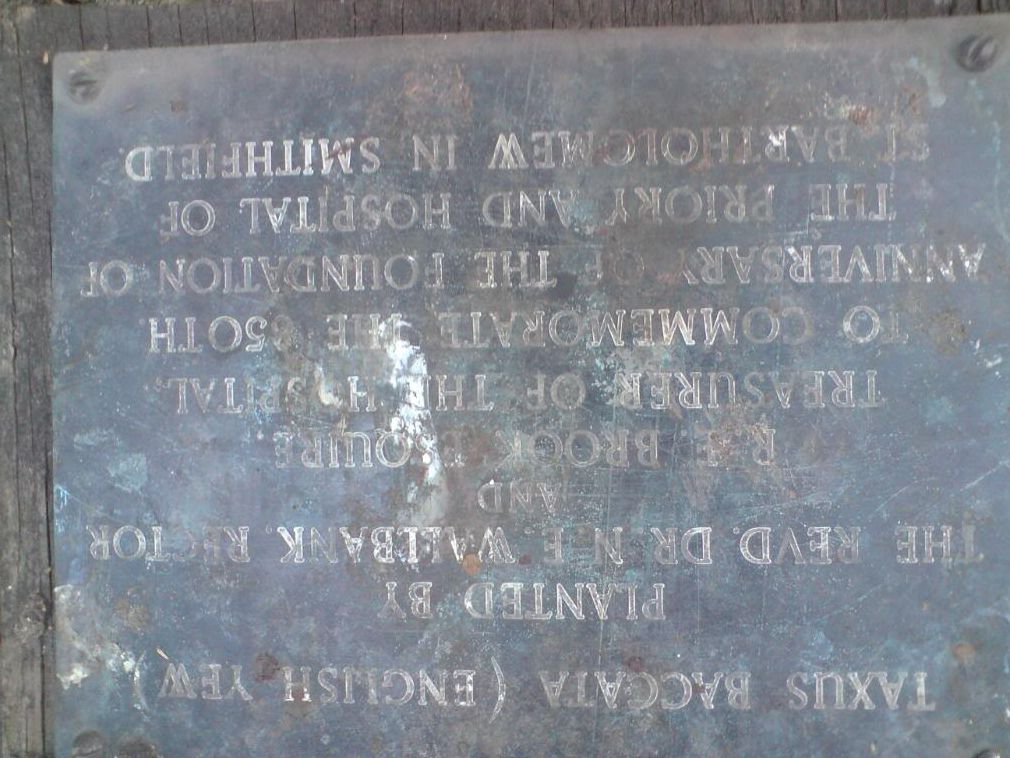
The bloody pigeons have *shat* all over it, but you can still make it out. It says, "Taxus Baccata (English Yew) Planted by the Revd. Dr. N. E. Wallbank Rector and Rev. Brooon Elowre, Treasurer of the Hospital to commemorate the 650th anniversary of the foundation of the Priority and Hospital of St. Bartholomew in SmithField".
Did you catch the name of the tree? English Yew? This tree has an ancient lineage and has a fascinating history, read the wiki article in here. This tree has connections with Caesar, Avicenna and what I knew before, the use of the wood to construct the famous English Longbow, the feared weapon. Fascinating history about this tree and its use in the longbow, but I am digressing.
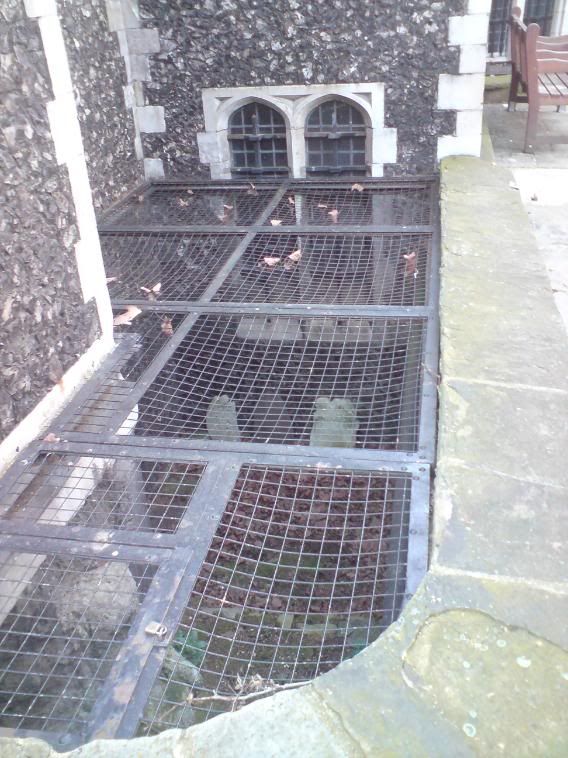
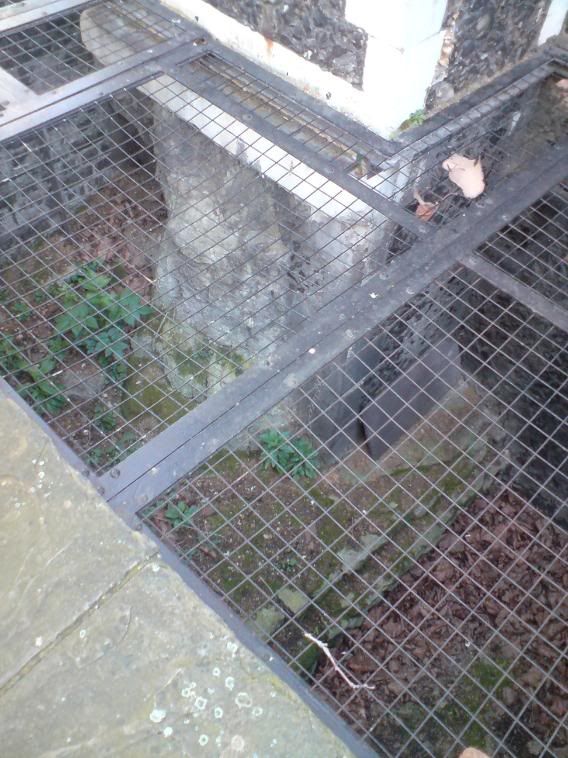
I noticed this grill on the ground. Seems like a cover for a passageway which has now been made defunct. Can you see the erosion on the foot of this buttress wall on the right? Looks extremely old to me. I guess the church keepers kept on increasing the height of the ground slowly over the centuries and now you end up with the church base far below the ground level.
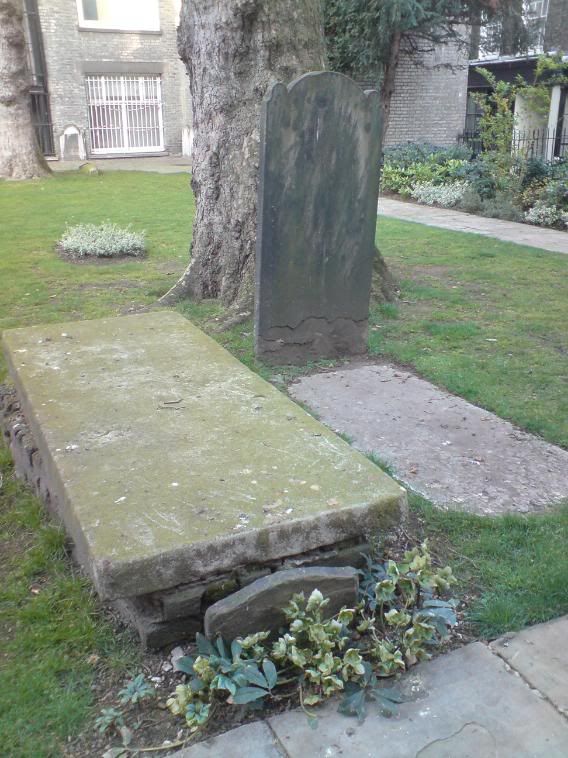
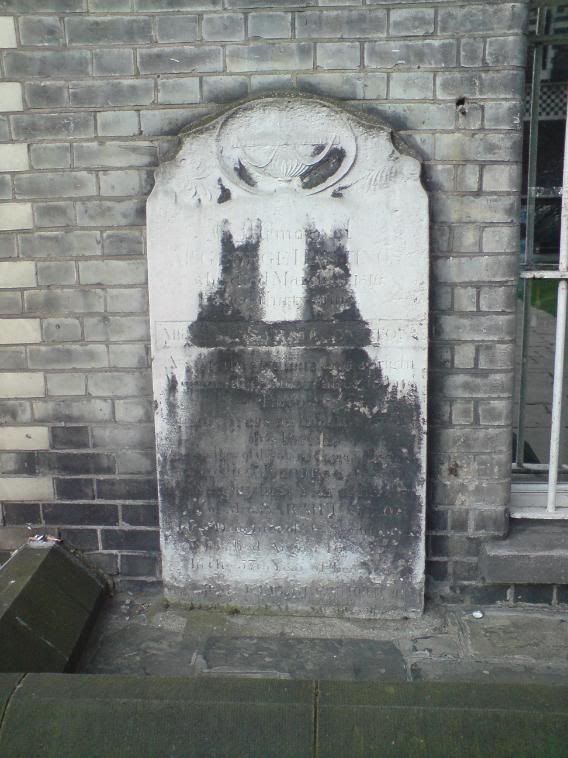
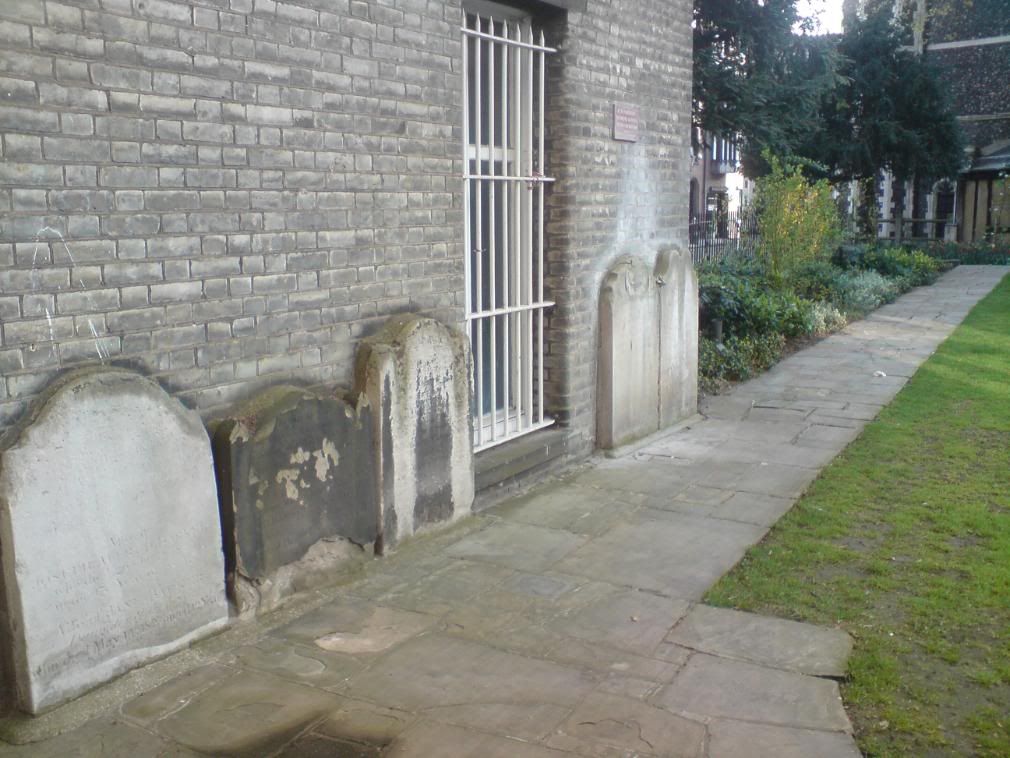
Usually a churchyard contains numerous graves, and for a millennium old church, this yard would be expected to have absolutely huge numbers of them. But no, not many graves at all, and whatever was left, was too decrepit and worn away (yes, from the pigeon droppings as well, bloody things are feathered rats, disgusting acidic droppings create havoc with stonework). Apparently they moved all the gravestones to the sides, see the picture on the right and the next one. The gravestones are cemented into the wall. Obviously, they no longer relate to the actual burial place. Something strange here, I need to do some more research about why this happened.
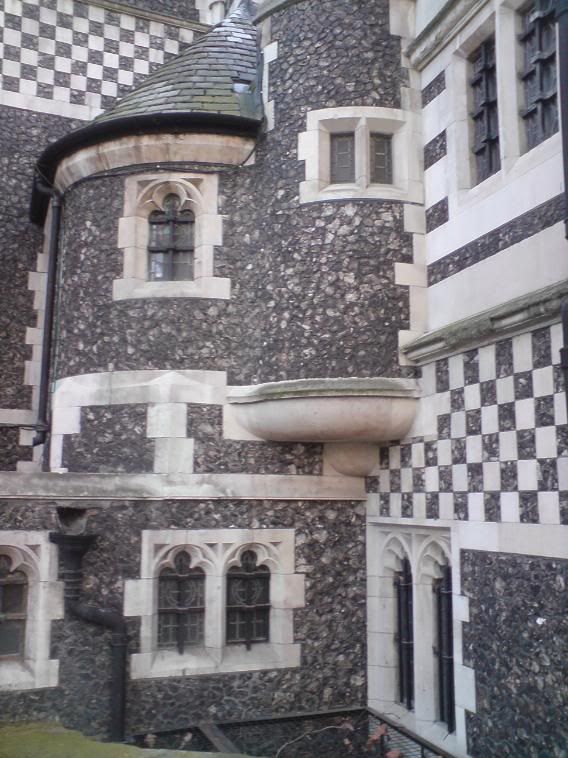
The angle of the corner of the building which encloses the Radiating Chapel (I think, I did not get a chance to get inside the building). But this church has been torn down, set fire to, bombed and what all, so it has a very eclectic collection of architectural styles)
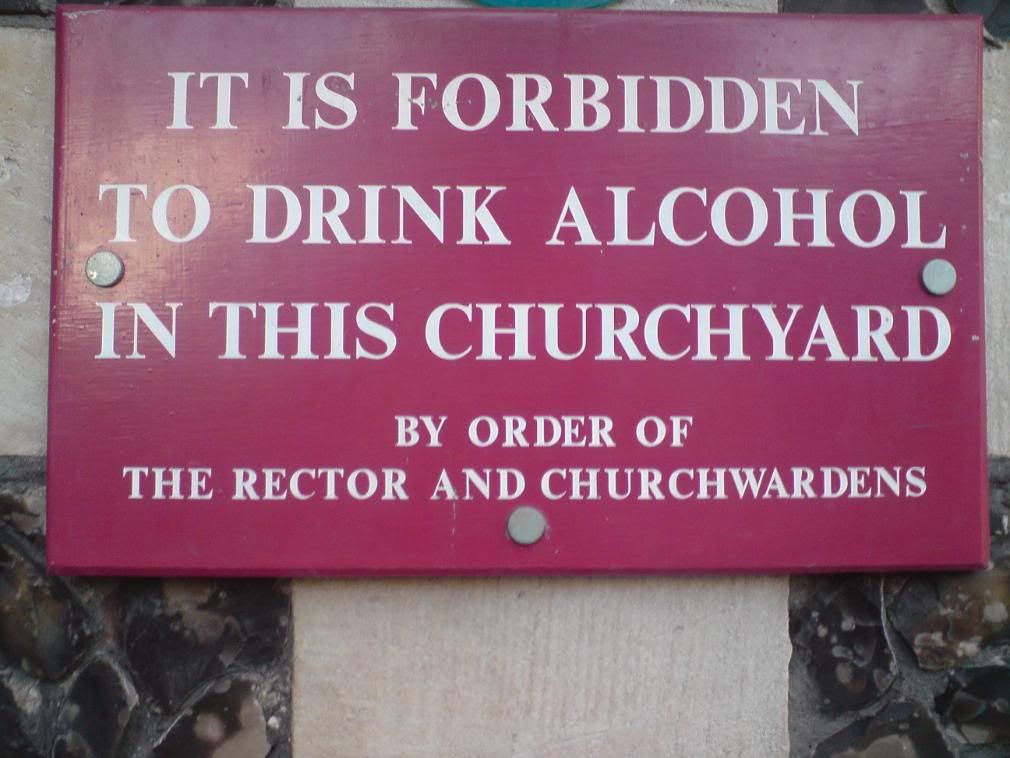
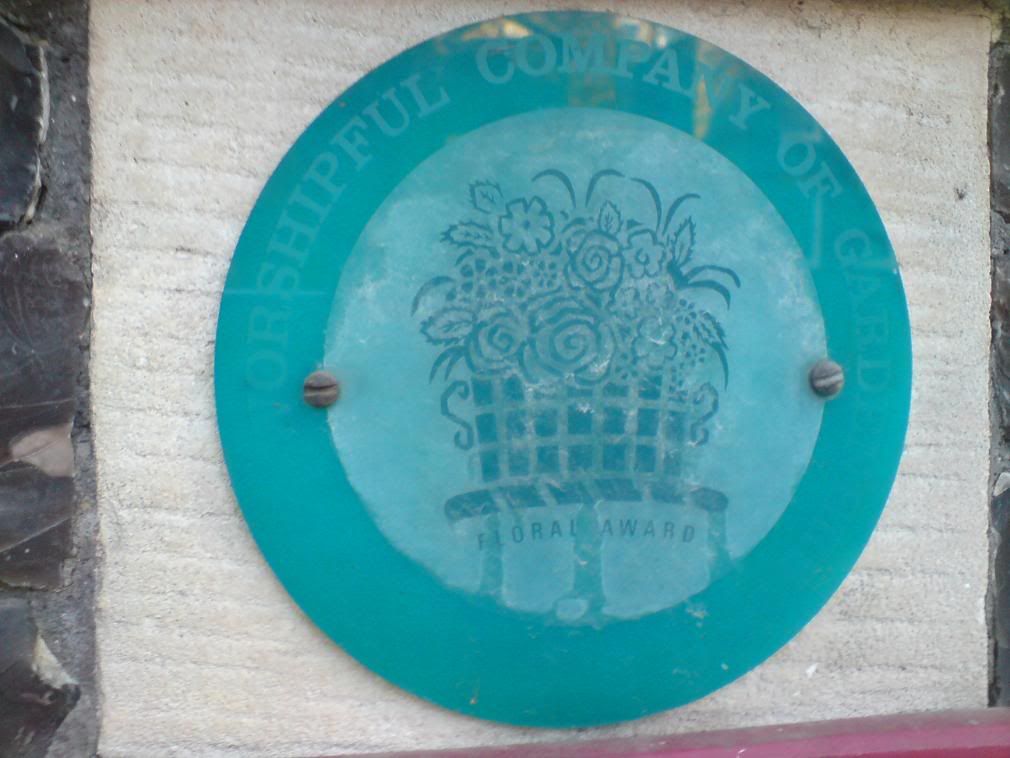
Well, you have been told off (but more on this later), no drinking in the churchyard, but the right hand sign shows that the garden is maintained by the Worshipful Company of Gardeners.
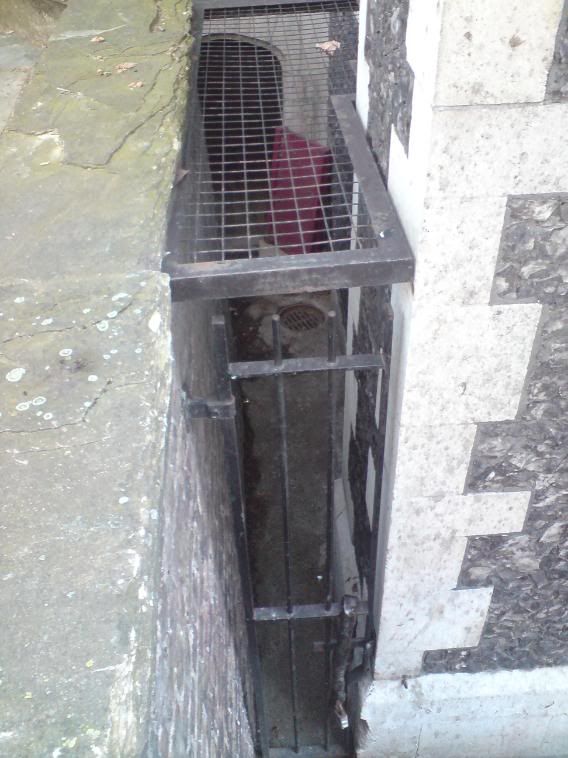
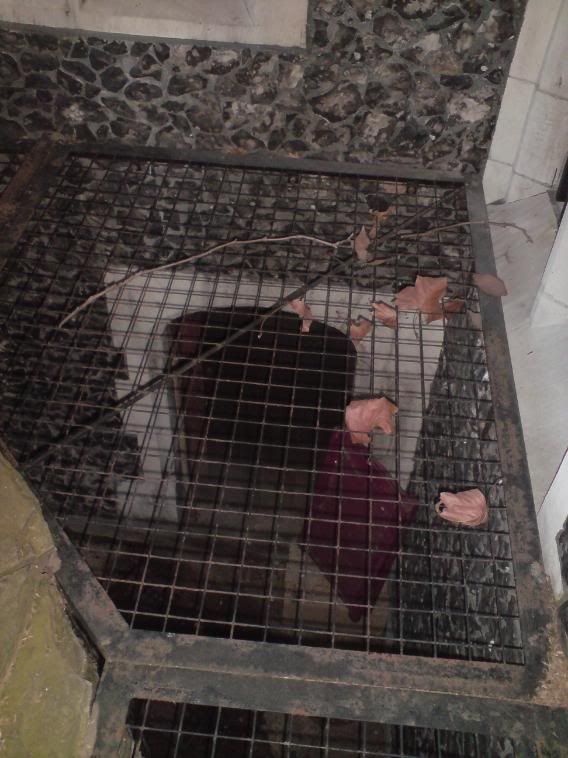
There was a very narrow passageway at the bottom. With a tiny gate, that couldn't be more than 50 cms wide. If you follow the passageway, you can see that it ends at a tiny door. Looking down on it, I felt like Alice in Wonderland like the picture below:

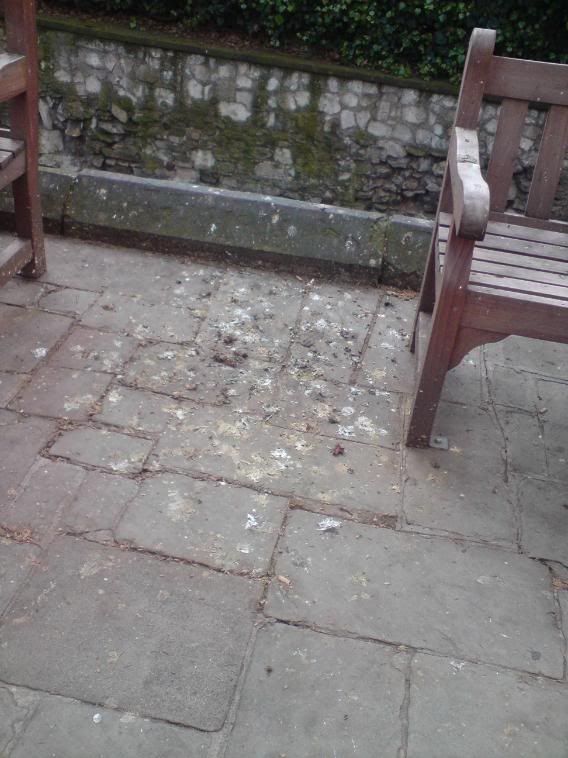
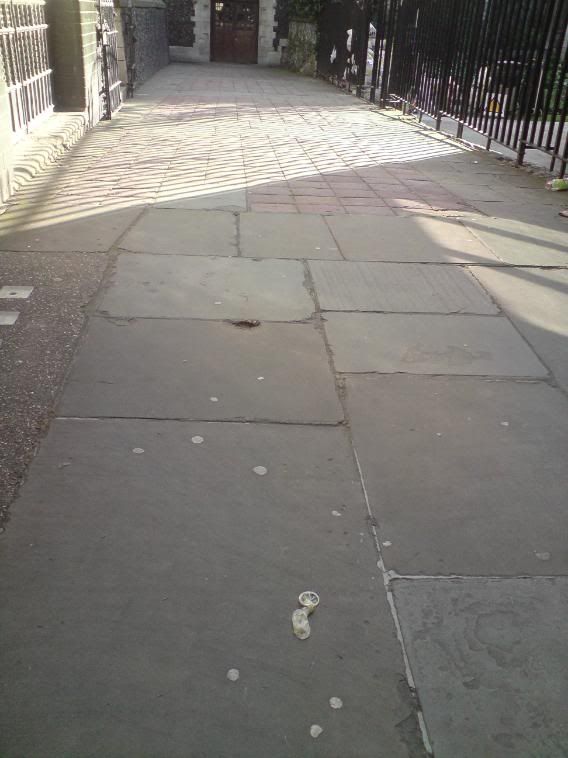
See what I mean about the bloody pigeons? I can identify with this song "Poisoning pigeons in the park" by Tom Lehrer. Mind you, the people living around the church yard are no better, poxy chaps were dropping, erm, the rubber receptacles which are discarded as an integral part of post coital activities. Philistines, I tell you. In a church yard, of all places!
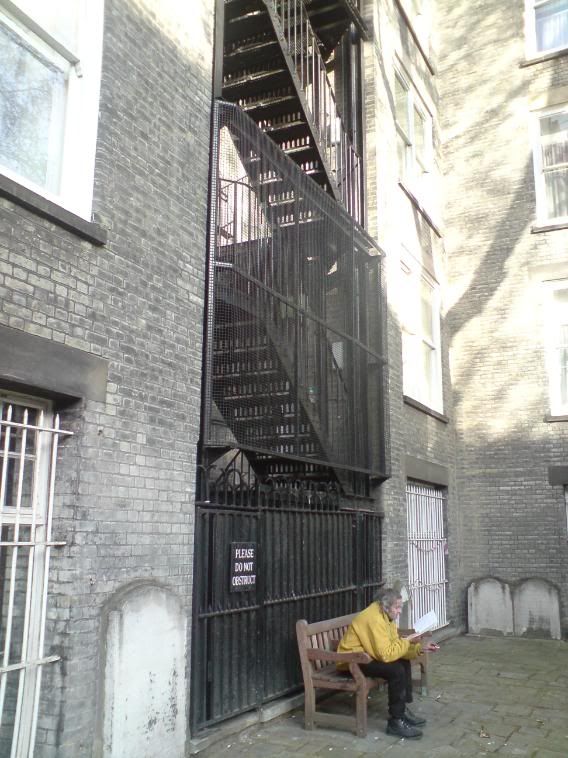
Despite the presence of the sign forbidding any consumption of alcohol in the church yard, you still have this wino who was there.
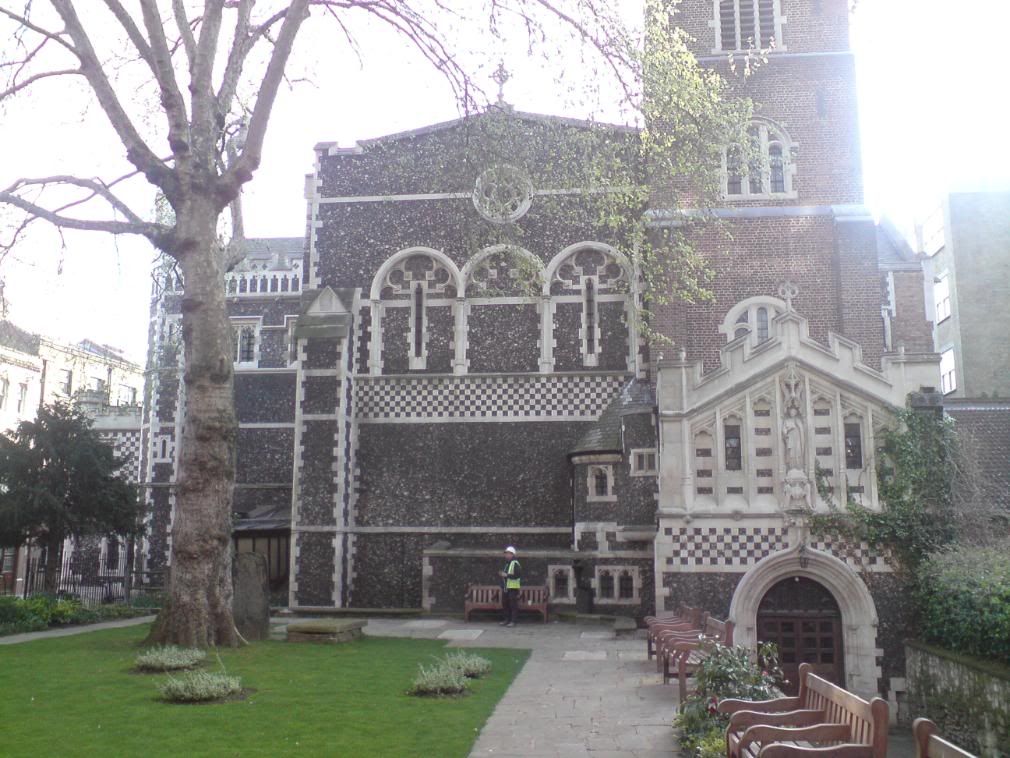
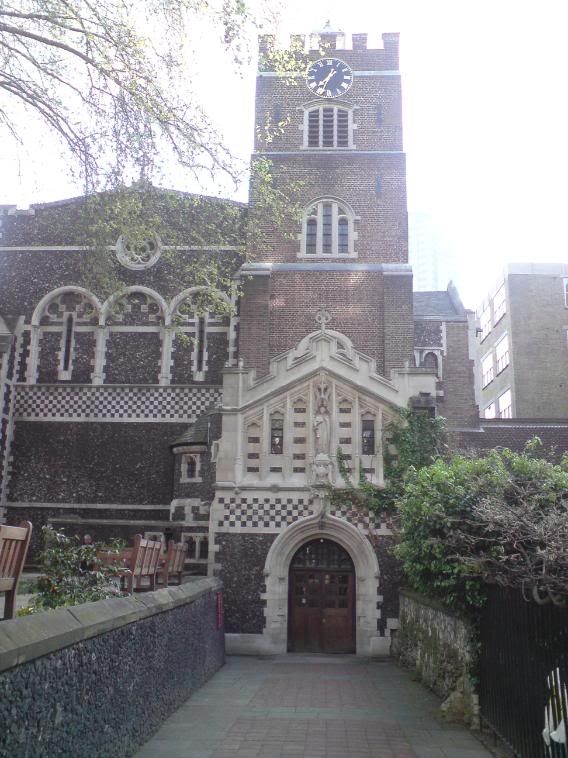
Looking back at the church, see the sunken door on the right? The entrance to the church is down a ramp. Just shows how the surrounding land has gone up over the centuries due to soil accumulation and and and.
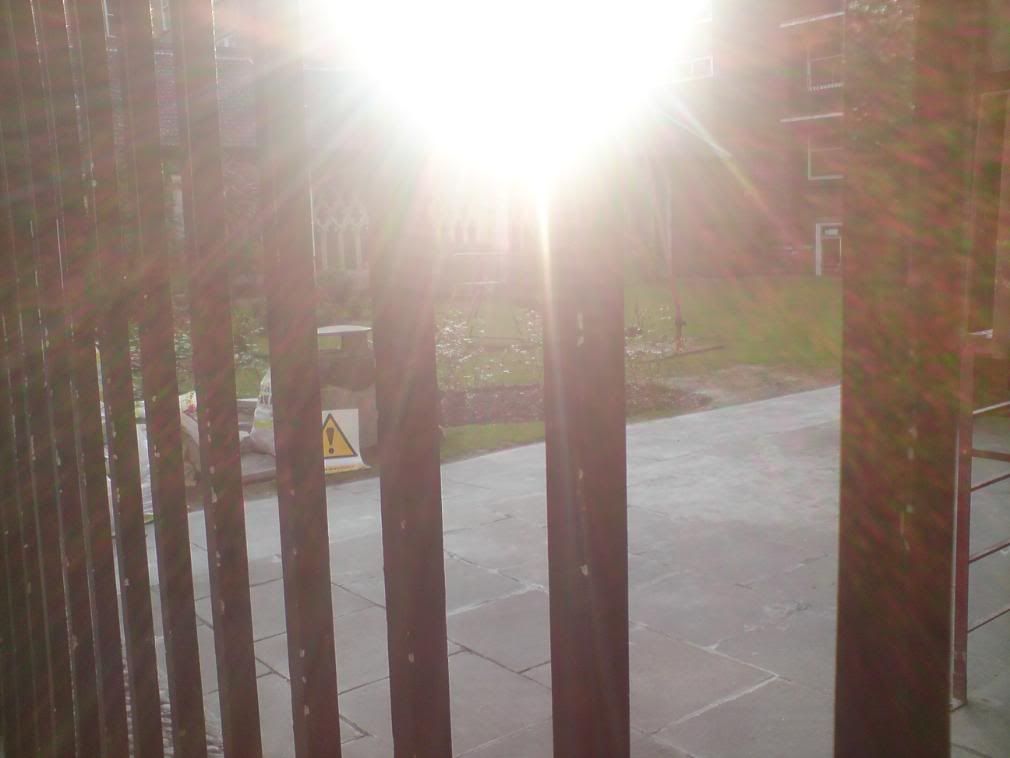
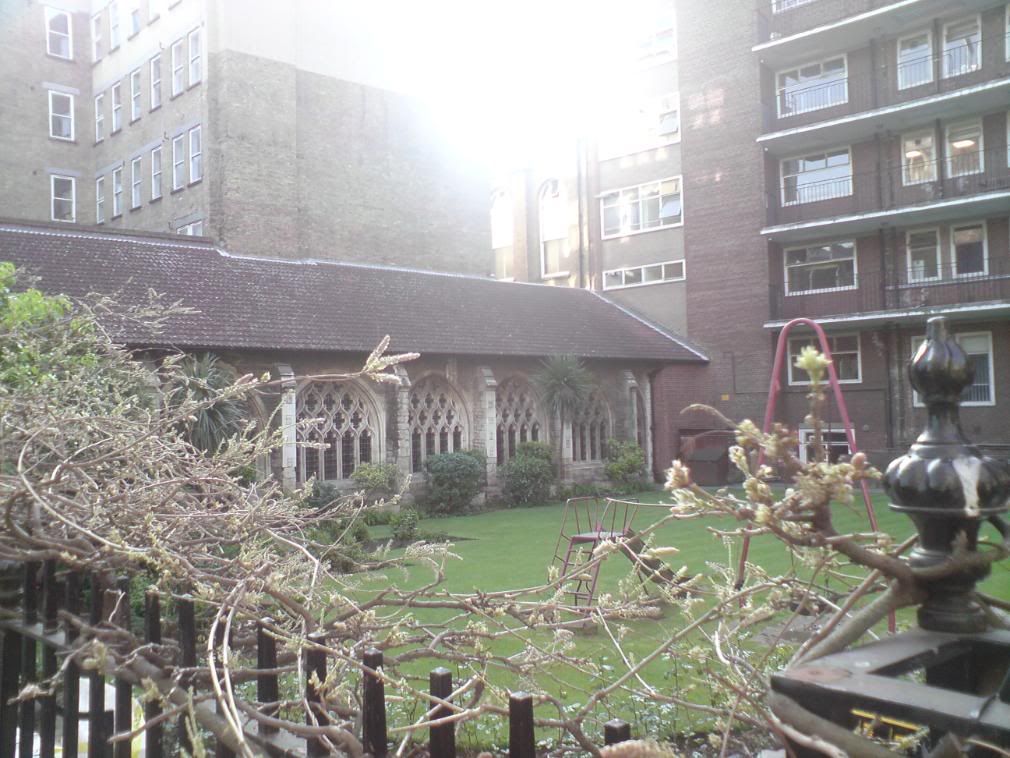
Here is the walled off garden. I wasn't sure if this was church property or some body else's garden, but what the heck, here you go.
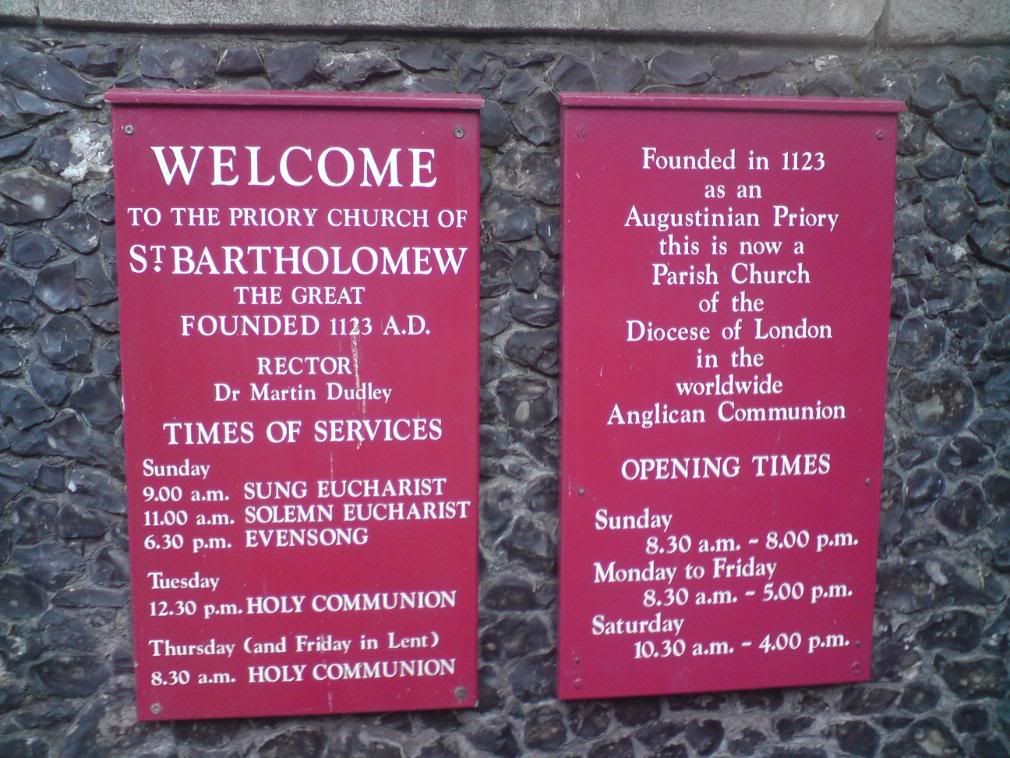
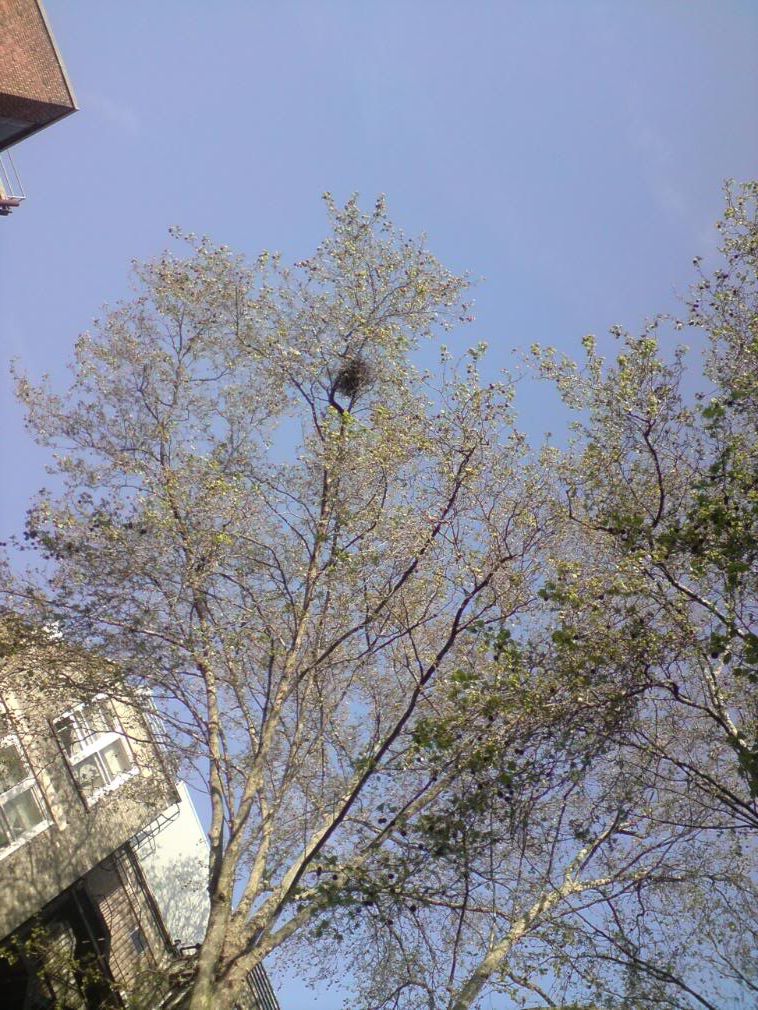
Another sign for St. Bart's and then a shot of a tree, with a nest. I think its a magpie nest but I am not sure.
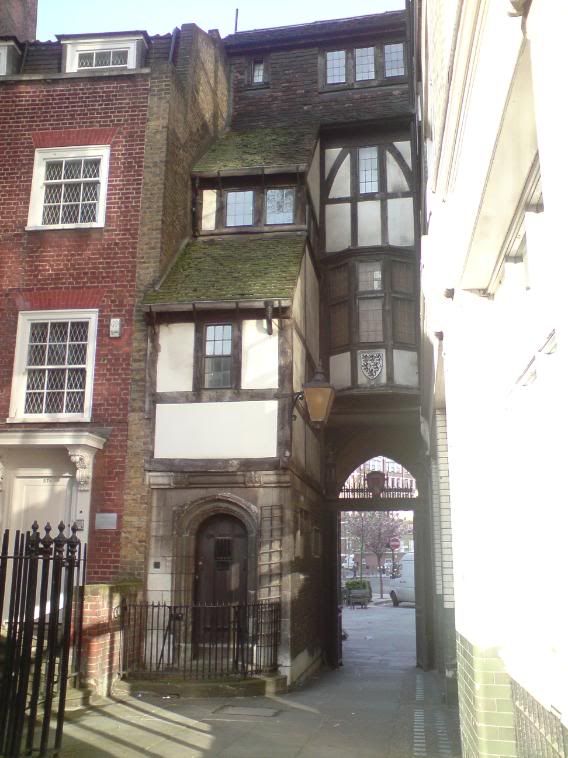
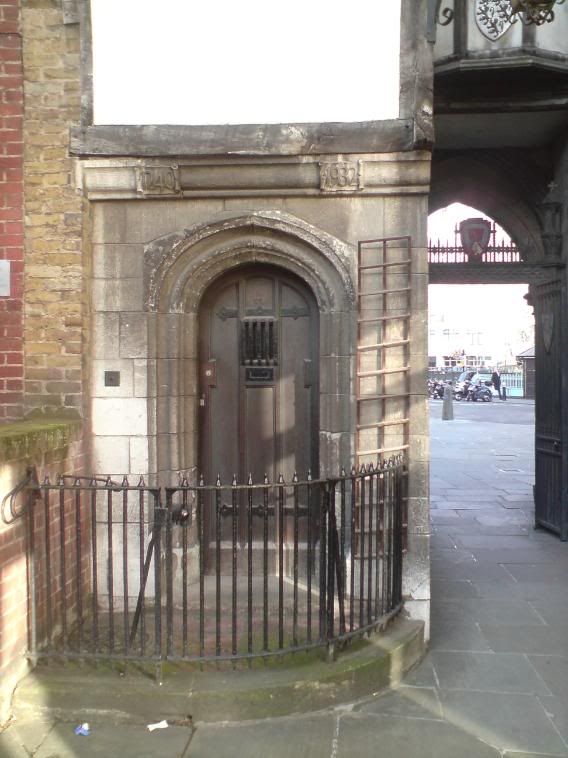
If I turn around, I see this absolutely wonderful tiny doll like ancient gatehouse.
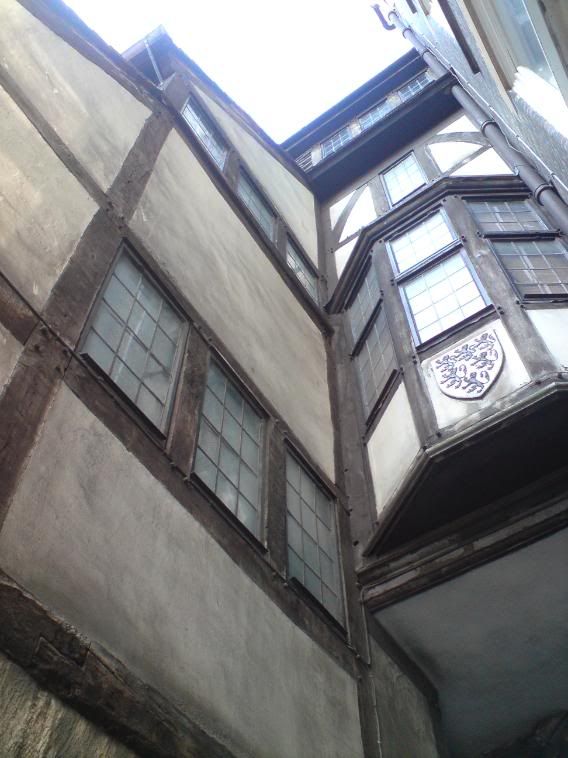
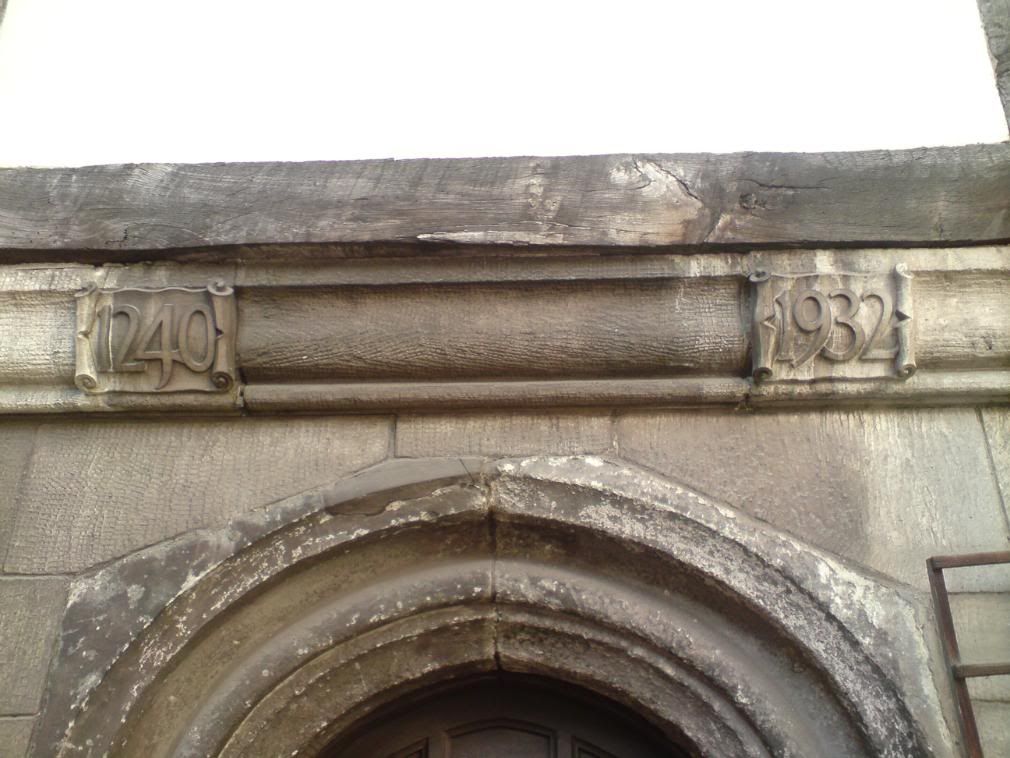
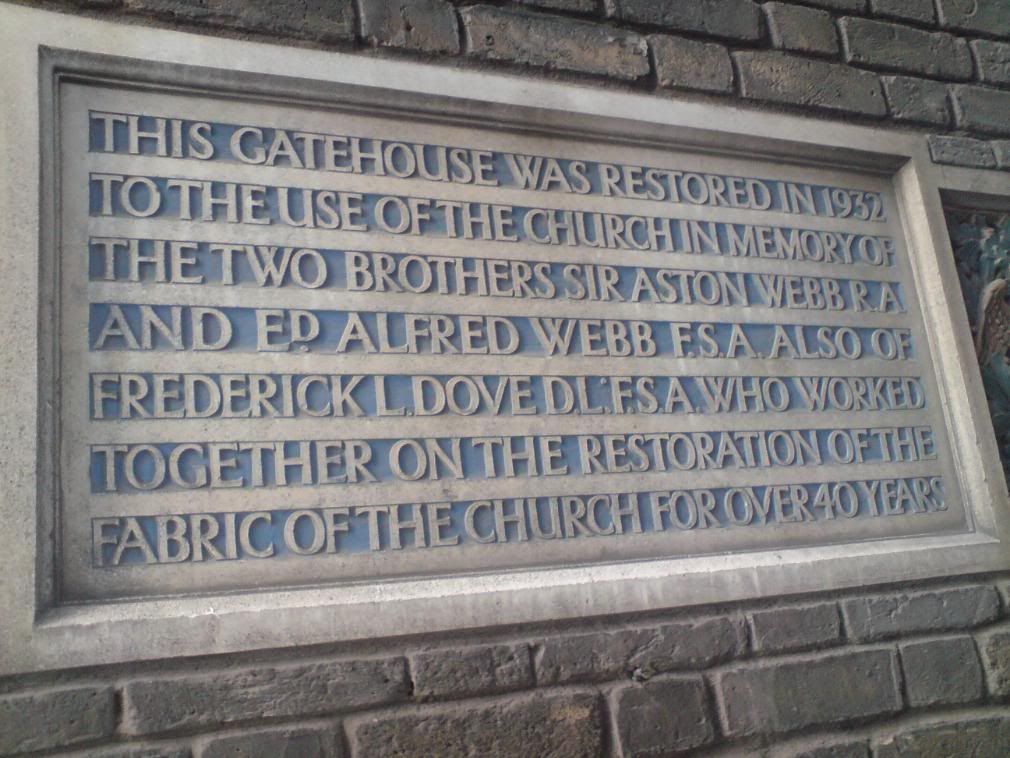
Made in 1242 and restored in 1932, see the smaller picture on the right? Just look at it, the beams of wood are hundreds of years old, the window panes are held together by lead casings. Absolutely brilliant.
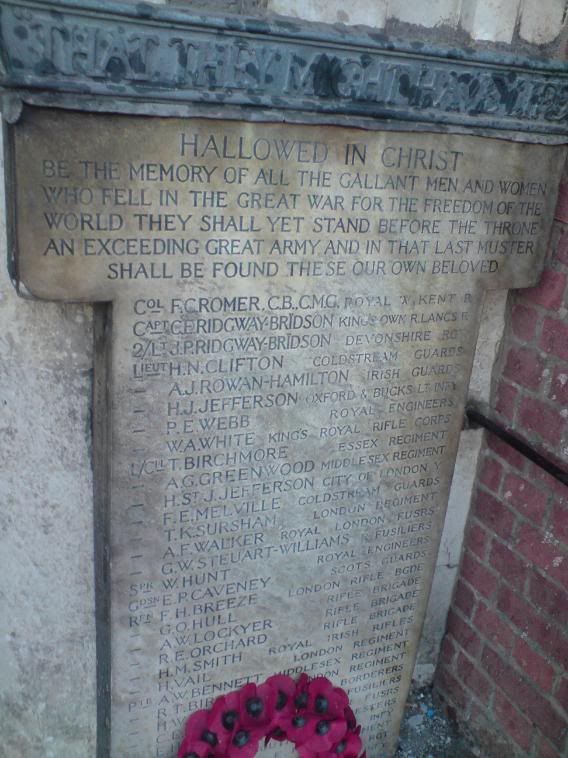
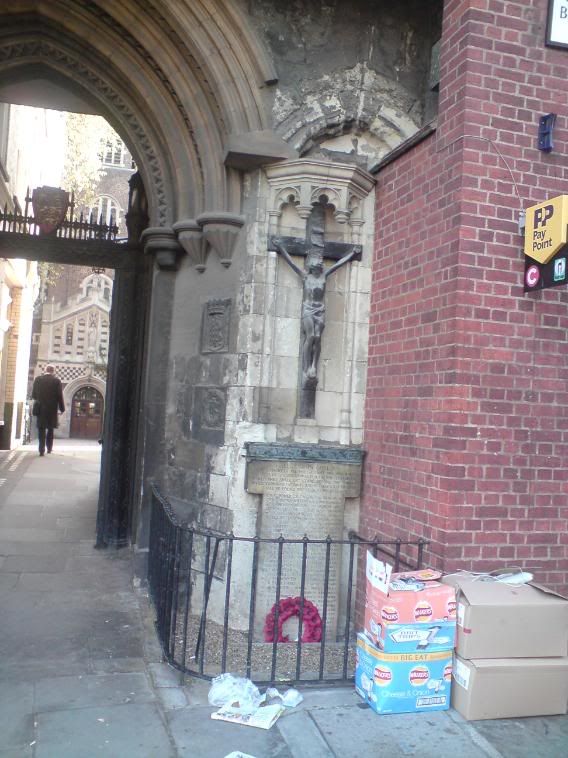
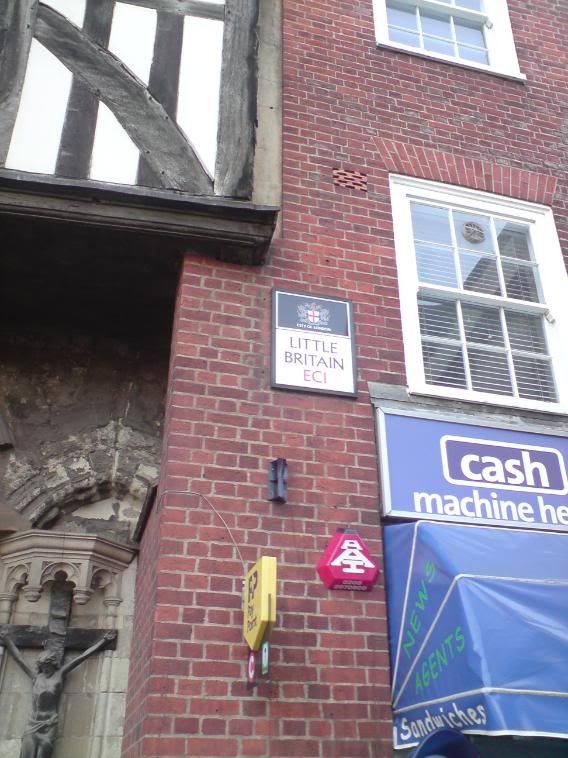
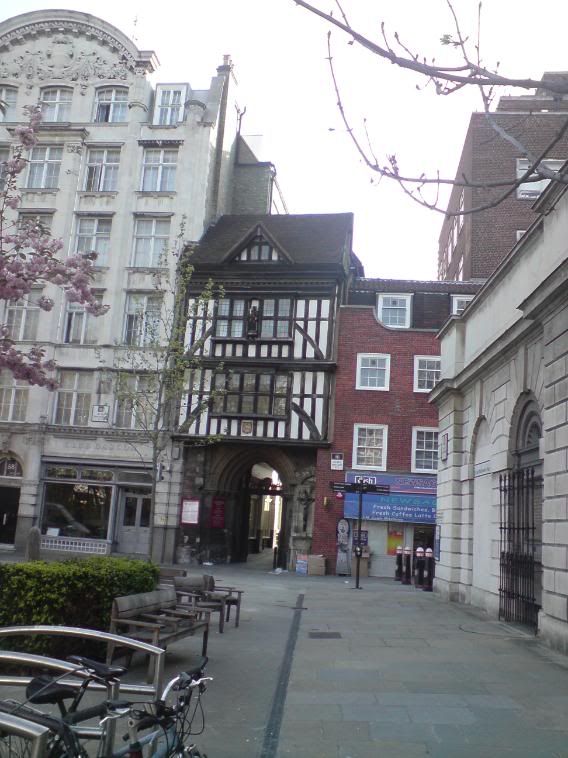
As you step outside the gate, just to the left you find this rather hidden war memorial with a beautiful black Christ on a crucifix. The gate stonework is beautiful, and the brick wall on the right is obviously a much later addition, which has hidden a now bricked up side archway. A poppy wreath is delicately kept below the war memorial. The whole thing is rather sad, with some boxes of potato crisps and stuff just lying around (suspect it's from the convenience store), with plastic bags and a discarded newspapers. How soon you forget. The inscription is particularly poignant:
"Hallowed in Christ, Be the memory of all the gallant men and women who fell in the Great War for the Freedom of the World, they shall yet stand before the throne an exceeding great army and in that last muster shall be found these our own beloved".
followed by a list of names of those who have fallen from various regiments, arranged by rank. It is a bit curious about why this was placed here, and the collection of names and regiments. Hmmm, another mystery. The road is called as Little Britain. Curious name, no? The gatehouse looks so strange, juxtapositioned between two totally different styles of buildings.
But moving on as I was running short of time now.
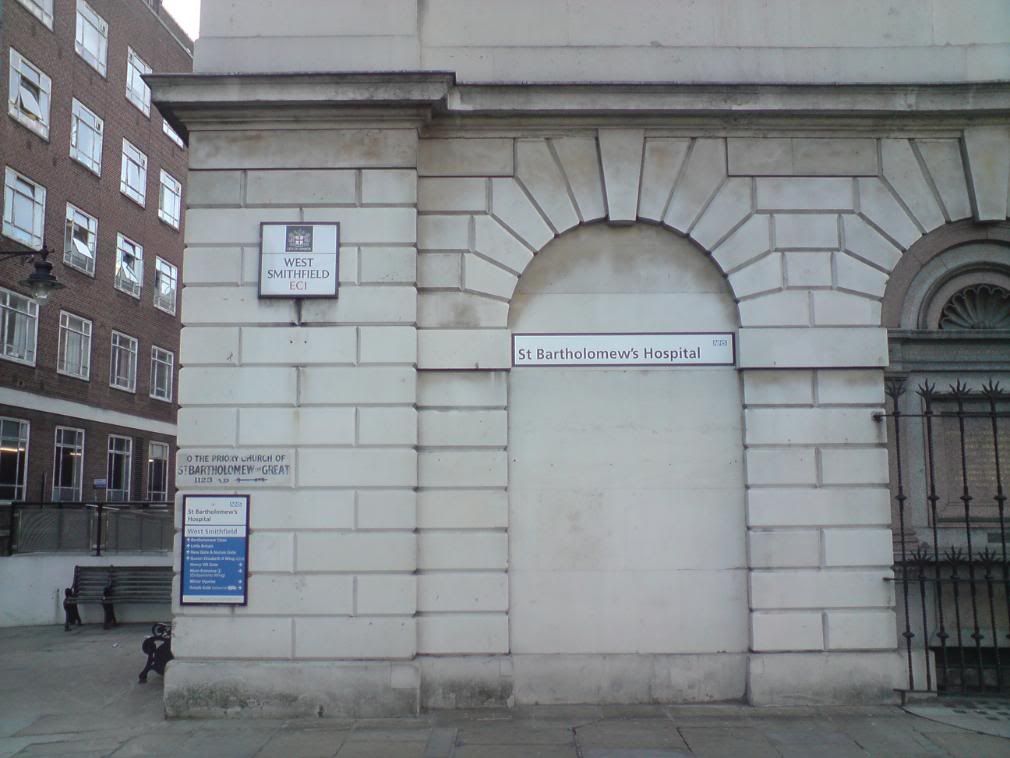
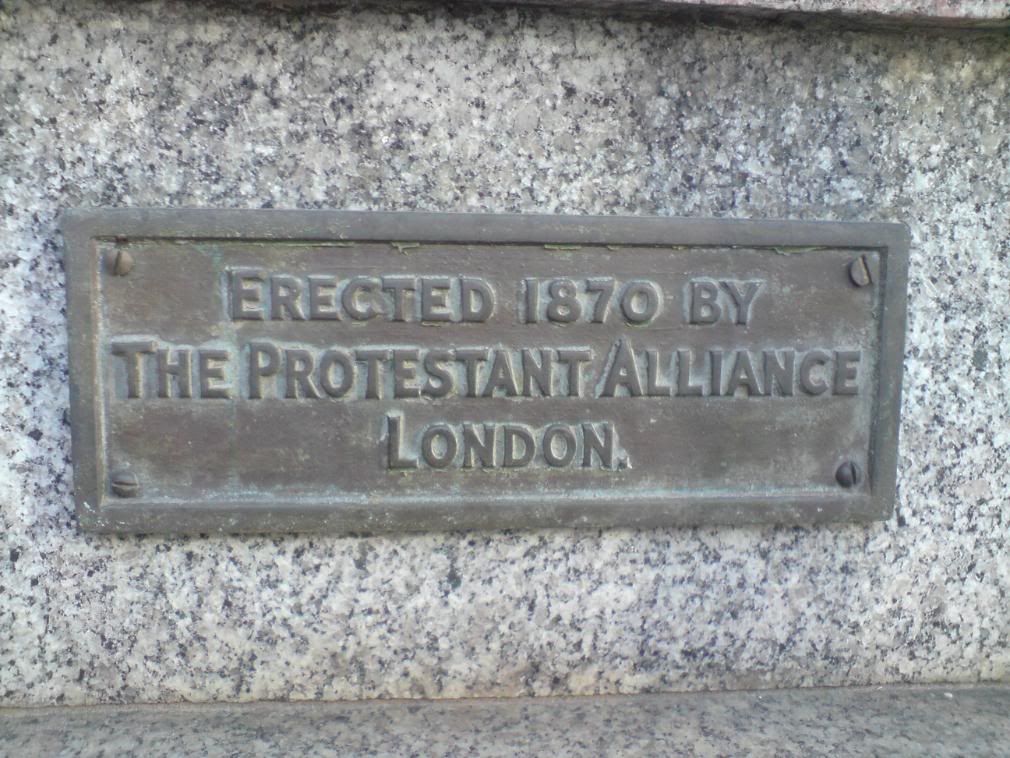
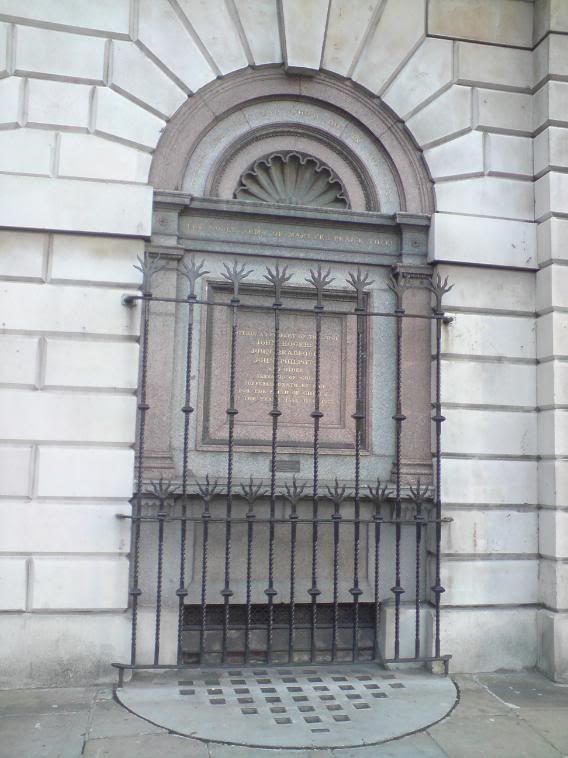
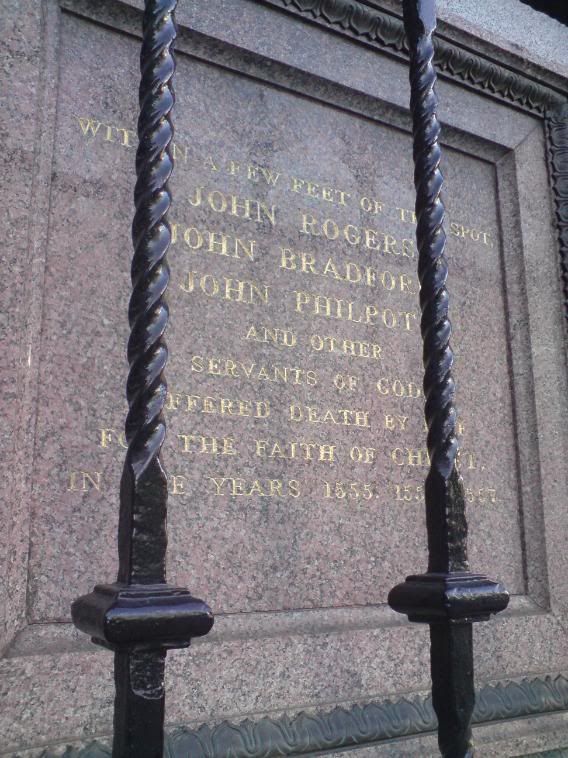
This is the corner of St. Bartholomew Hospital. A plaque is setup, which was erected in 1870 by the protestant alliance. A few chaps were burnt to death near this spot way back in 1555 -1557 (John Rogers, John Bradford, John Philpot, etc.) It has something to do with the fight between Catholics and Protestants.
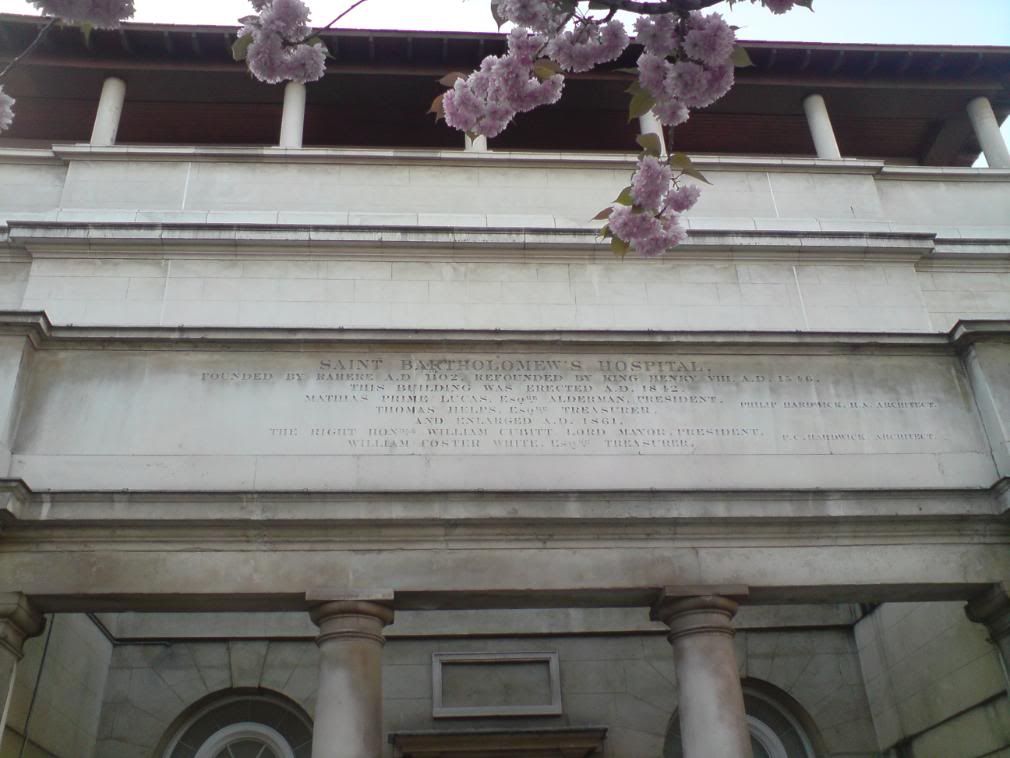
We come to the plaque on top of the entrance to St. Barts Hospital. I am going to quote this from here.
Founded by Rahere, formerly a courtier of Henry I. It was founded, with the Priory of St Bartholomew, in 1123 by Rahere, formerly a courtier of Henry I. A vow made while sick on a pilgrimage to Rome, and a vision of St Bartholomew, inspired Rahere to found a priory and a hospital for the sick poor at Smithfield in London. In the early medieval period the sick were cared for by the brethren and sisters of the Priory, but gradually the Hospital became independent. It was using a distinctive seal from about 1200, and by 1300 had its own Master. By 1420 the two institutions had become entirely separate
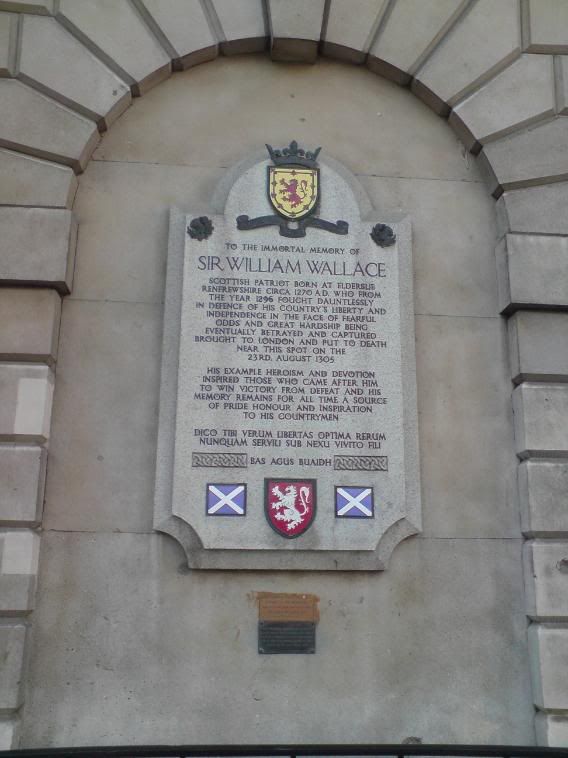
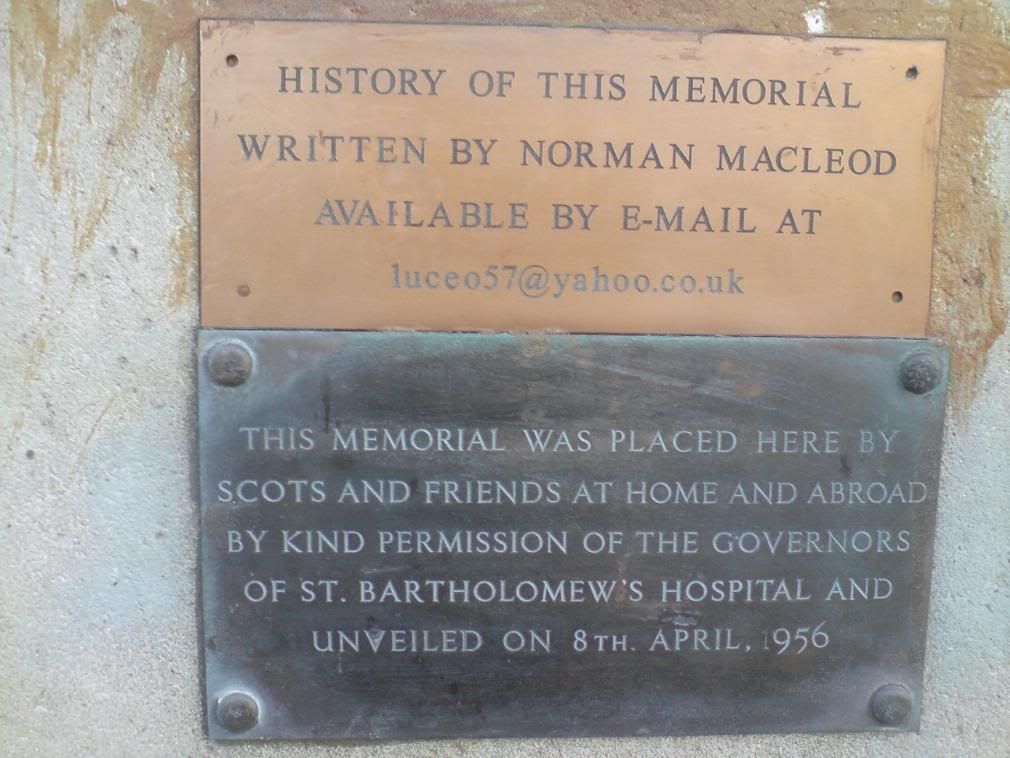
Finally you have the memorial to WIlliam Wallace, who lead a fight for Scottish Independence, who was captured and put to death near this site in 1305 AD. The death was pretty gruesome, and I quote:
Following the trial, on 23 August 1305, Wallace was taken from the hall, stripped naked and dragged through the city at the heels of a horse to the Elms at Smithfield. He was hanged, drawn and quartered — strangled by hanging but released while still alive, emasculated, eviscerated and his bowels burnt before him, beheaded, then cut into four parts. His preserved head was placed on a pike atop London Bridge. It was later joined by the heads of the brothers, John and Simon Fraser. His limbs were displayed, separately, in Newcastle upon Tyne, Berwick-upon-Tweed, Stirling, and Aberdeen.
They REALLY did not like him, did they? There are couple of additional plaque's on the wall below the memorial.
Full slide show here.
Technorati Tags: London,History


